Focused arrival windows
Useful updates and clear arrival timing.

Slab leak location services Venice FL homeowners call when the water bill spikes and the floor stays warm. We use acoustic microphones and thermal cameras to find the exact break under your slab, usually in under two hours. If you live in Sarasota County and suspect an under-slab pipe leak, we pinpoint it first so the repair stays small, fast, and affordable.
Useful updates and clear arrival timing.
Review the approach and price before deciding.
Equipped vehicles and respectful cleanup.
Neighbors serving neighbors with follow-through.
Every location visit is a complete diagnostic, not a quick listen and a guess. Here is what is covered in the standard fee, and what we hand you before we leave your Venice home.
We isolate the domestic water system and pressurize it with a calibrated gauge to confirm an under-slab leak. This rules out drain clogs, irrigation, and pool lines so we are not chasing the wrong pipe.
A Sewerin acoustic microphone traces the slab for the sound of escaping water. We sweep from two directions and triangulate, which is what turns a general area into a specific spot.
A FLIR thermal imaging camera confirms the acoustic hit by showing the heat signature of the leak. When both methods agree, we mark the tile with paint.
Moisture meters map the wet zone around the suspected leak. This helps separate an active slab leak from old staining and tells us how far the water has traveled under the floor.
You get a written report with the marked location, pipe material, estimated depth, and recommended repair method. Your plumber can quote the repair from that report without a second visit.
If you need a repair plumber, we can refer one who works from our report. If you already have a plumber, the report gives them everything they need to cut once and fix it right.
Share what is happening and receive a clear next step from the local team.
Slab leak location services Venice FL is a diagnostic plumbing service that finds the exact point where a water line under your concrete foundation is leaking, using sound, heat, and pressure rather than guesswork. We pressurize the line, listen for the leak with an acoustic microphone, then confirm the spot with a thermal imaging camera. No exploratory jackhammering. No tearing up half the house to find one pinhole pipe leak.
Venice sits on a mix of 1960s block homes and newer builds, and both have slab plumbing that ages badly in sandy, shifting soil. Copper pipe corrodes, CPVC gets brittle, and a warm floor spot or high water bill is usually the first sign. If you need to locate slab leak Venice Florida fast, we schedule same-day diagnostics across 34285, 34292, and 34275 so a small leak never becomes a foundation water leak.
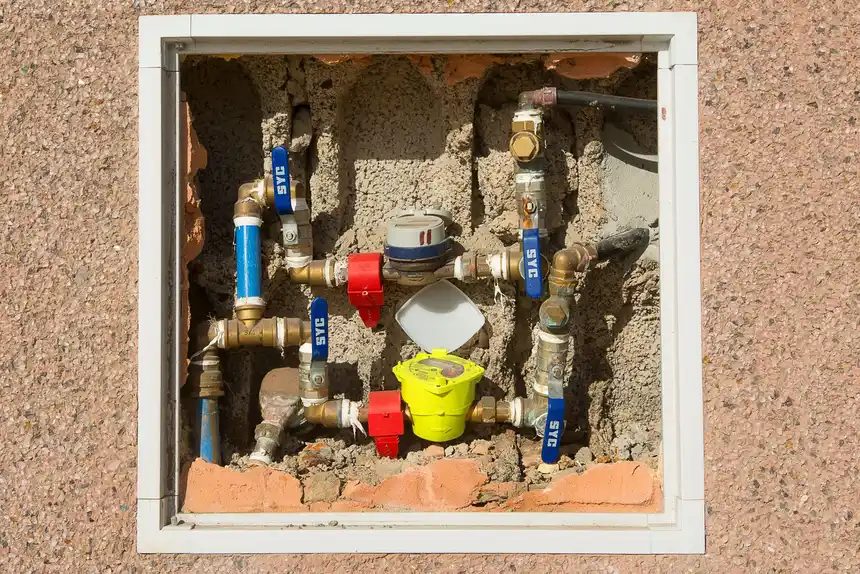
You tell us what you are seeing: warm floor spots, a spinning water meter, a high water bill, or water pooling on floor. We ask the right questions up front, give you a straight price for the location visit, and book a same-day or next-morning window.
We isolate the domestic water system and pressurize it with a calibrated pressure testing gauge. If the gauge bleeds down with every fixture off, you have a confirmed under-slab pipe leak. This step takes about 20 minutes and rules out drain clogs and irrigation lines.
Using a Sewerin and RIDGID acoustic leak detection microphone, we walk the slab and listen for the hiss of escaping water. We mark the loudest point, then sweep again from a second direction to triangulate. Most leaks announce themselves clearly at 40 to 60 dB.
A FLIR thermal imaging camera shows the temperature signature of a hot-water leak or the cool spot of a cold line. When the acoustic hit and the thermal image land on the same tile, we have our spot. Two methods, one answer.
We mark the exact location with paint, photograph it, and hand you a written report with depth, pipe material, and recommended repair method. Your plumber now knows precisely where to cut, and you know exactly what you are paying for.
Picks up the sound of pressurized water escaping through concrete, letting us trace the leak to a specific tile.
Shows the heat signature of hot-water leaks and the cool spots of cold lines, confirming the acoustic hit.
Isolates and pressurizes the domestic water line to confirm an under-slab leak before we sweep.
Inspects accessible drain and supply lines to rule out clogs and confirm pipe condition.
Maps the wet zone around the suspected leak and shows how far water has traveled under the slab.
Powers the concrete saw and jackhammer when the repair crew opens the marked spot.
We never mark a leak from a single reading. Acoustic triangulation gets us close, then thermal imaging or pressure isolation confirms it. Two independent signals on the same spot is our standard before we mark anything.
We shut off fixtures and irrigation, pressurize the domestic line, and watch the gauge. A steady drop confirms an under-slab leak and rules out drain clogs, which is the most common misdiagnosis in Venice homes.
We sweep the slab from two directions and compare the loudest points. Where the two sweeps converge is the leak. This method works through tile, laminate, and most floor coverings without opening anything.
A FLIR camera maps temperature differences across the slab. Hot-water leaks show as warm streaks and cold leaks as cool spots. We overlay that map on the acoustic hit to lock the location.
All location and repair recommendations follow the Uniform Plumbing Code (UPC) and Florida Building Code. That keeps your repair inspection-ready and your homeowner's insurance claim clean.
We run a full pressure test and acoustic sweep before closing, then give you a written report with the location and estimated repair scope. That report is leverage in negotiation and clarity for your plumber. You know exactly what you are buying and what the repair will cost before you sign.
We isolate the domestic line, confirm the leak with a pressure gauge, and pinpoint it with acoustic and thermal tools. Same-day windows are usually available across Venice. The leak is marked and the repair crew can stop the water loss the same day.
We re-run the diagnostics from scratch with two independent methods and mark the true location. We also document why the first guess missed, so it does not happen again. The real leak gets found and repaired without a second blind excavation.
We locate the current leak and assess the pipe material and condition across the system. If the plumbing is failing broadly, we tell you whether spot repair or repiping is the better spend. You make a repair-or-repipe decision based on real data, not a sales pitch.
Venice plumbing has its own personality. The soil here is sandy and shifts with the water table, which stresses under-slab lines more than inland Florida. Older homes near Downtown Venice and the Venice Canals often still have original copper pipe that has been pinhole leaking for years. Newer builds in Venice Gardens and North Venice use PEX and CPVC, which fail at fittings more than mid-run. Add our high water table and hot summers, and slab leaks show up year-round, not just in one season. We adjust our acoustic sweep for tile, laminate, and terrazzo floors common in this area, and we know which Venice neighborhoods have the shallowest slabs. If you need to find slab leak Venice homeowners can trust, local pattern recognition matters as much as the equipment. We also coordinate with Sarasota County inspectors when a repair needs a permit, so nothing stalls after the concrete opens.
Historic homes with original copper plumbing and shallow slabs. Acoustic sweeps work well here because most floors are tile over thin mortar.
High water table and older construction. We watch for both supply-line leaks and groundwater intrusion that mimics a slab leak.
Mostly 1970s to 1990s builds with copper and early CPVC. Fitting failures are common, and thermal imaging catches them fast.
Newer construction with PEX systems. Leaks cluster at manifolds and fittings, so we pressure test zones individually.
Salt air accelerates corrosion on exposed copper and fittings. We inspect pipe condition alongside the leak location.
Soil movement stresses under-slab pipe and can mask the leak source. We pressure test first to separate a true slab leak from groundwater intrusion.
Thermal imaging works year-round here, but we adjust for ambient slab temperature so a warm floor spot is not confused with sun exposure.
Pipe material changes the leak signature and the repair method. We document material in every report so your plumber brings the right parts.
Floor covering affects acoustic transmission. We calibrate the microphone and confirm with thermal imaging so tile does not hide the leak.
A family in Venice Gardens saw their water bill jump from $95 to $310 in one cycle. The meter spun with every fixture off. Two plumbers guessed at the slab but neither could say where to cut.
We pressure tested the line, swept the slab acoustically, and confirmed with thermal imaging. The leak was a pinhole in a copper hot line under the kitchen tile. The repair crew opened one 2-foot patch and fixed it the same day.
Maintenance: We recommended a follow-up pressure test in 12 months and a water meter check each quarter. Catching the next pinhole early keeps the repair small.
A 1962 home near Downtown Venice had a warm strip across the hallway floor. The homeowner assumed it was sun exposure. The water bill told a different story, up $140 over two months.
Thermal imaging showed a clear hot-water signature, and the acoustic microphone confirmed the break within 8 inches. The plumber opened a single tile, replaced a corroded copper section, and the floor temperature returned to normal.
Maintenance: We suggested annual thermal scans during the cooler months and keeping an eye on the water meter for slow rises.
A Silver Strand homeowner paid a previous plumber to jackhammer a 4-foot trench in the garage. No leak was found. The water bill kept climbing and the floor stayed wet near the laundry room.
We re-ran diagnostics and found the actual leak 11 feet away at a PEX fitting under the laundry tile. The repair took under two hours and the water bill dropped back to normal the next cycle.
Maintenance: We recommended checking PEX manifolds every two years and keeping the written location report on file for future reference.
Most Venice slab leak calls start with one of these five symptoms. Each one has a different cause, and each one needs an accurate location before anyone cuts concrete.
An underground water leak can waste thousands of gallons a month and quietly undermine the soil under your slab, leading to settling and cracked tile. We pressure test the domestic line to confirm the leak, then sweep the slab acoustically to find the break. You get a marked spot and a report so the repair is targeted, not exploratory.
Warm floor spots usually mean a hot-water line is leaking under the slab. Left alone, the heat and moisture damage flooring, and the leak grows. Our thermal imaging camera maps the warm signature while the acoustic microphone confirms the exact break. We mark the tile so your plumber opens one small patch.
Pooling water with no fixture leak points to a slab leak or a drain issue. Guessing wrong means paying for the wrong repair twice. We isolate the water system from the drain system first, then locate the actual source. That step alone saves Venice homeowners from paying to open the wrong part of the floor.
Constant running water with no fixture on is a classic under-slab pipe leak. It will not stop on its own and the damage compounds weekly. We use the acoustic leak detection microphone to trace the sound to its source and confirm with pressure testing. You get a precise location and a clear next step.
A foundation water leak softens soil and shifts the slab, which cracks walls, tile, and driveways. Catching it early is the difference between a repair and a rebuild. We locate the leak fast and document the moisture pattern so your repair crew can fix the source before more soil movement occurs.
$250 - $450 for standard residential slab leak location in Venice
Typical 2026 pricing for slab leak location services Venice FL runs $250 to $450 for a standard residential diagnostic. Larger slabs, difficult access, and commercial properties can push higher. The fee covers pressure testing, acoustic sweep, thermal confirmation, and a written report. Compare that to exploratory demolition, which can run $1,500 or more before anyone finds the leak. Paying for an accurate location first is almost always the cheaper path.
The location fee is the cheapest part of a slab leak repair. It is what keeps the jackhammer from opening the wrong floor and turning a $400 fix into a $9,000 foundation job.
A 1,200 square foot home takes less sweep time than a 3,000 square foot home with multiple zones. Larger slabs and additions add diagnostic time and cost.
Tile and terrazzo transmit sound well. Thick carpet, floating laminate, and area rugs muffle acoustics and may require more thermal work to confirm the spot.
Homes with multiple supply zones, pool lines, or irrigation systems need each zone isolated and tested. More zones means more pressure testing steps.
Furniture, built-ins, and tight crawl access slow the sweep. Clearing the area before we arrive keeps the visit inside the standard window.
Commercial slabs often need after-hours work, multiple isolation points, and a more detailed report, which raises the diagnostic fee.
Active flooding and after-hours calls carry a higher rate. Scheduled weekday visits stay at the standard location fee.
Our water bill jumped $180 in one month and the hallway floor was warm. Venice SlabGuard came out the same afternoon, pressure tested the line, and marked the leak within a foot. The plumber opened one tile, fixed it, and we were done by dinner. No trench across the house.
I manage six rentals near the Canals and slab leaks are my nightmare. These guys located a leak in a 1950s duplex in about 90 minutes and handed me a written report with pipe material and depth. My repair crew knew exactly where to cut. That report saved me a full day of labor.
Two other plumbers wanted to jackhammer first and find it later. Venice SlabGuard listened with their acoustic gear, confirmed it with the thermal camera, and marked the spot in paint. The leak was exactly where they said. Honest pricing and no mess beyond the repair itself.
We pressurize the water line, sweep the slab with an acoustic leak detection microphone, then confirm the spot with a FLIR thermal imaging camera. The whole process takes one to two hours in a typical Venice home. You get a marked location and a written report the same visit, with no exploratory demolition.
Our two-method confirmation lands within 6 to 12 inches of the actual break on most jobs. Acoustic triangulation gets us close, and thermal imaging locks it in. That accuracy is why plumbers can open one small patch instead of trenching the room. We mark the spot in paint so there is no argument later.
Typical 2026 pricing for slab leak location services in Venice FL runs $250 to $450 for a standard residential diagnostic, depending on slab size and access. That fee covers pressure testing, acoustic sweep, thermal confirmation, and the written report. It is a fraction of what exploratory demolition costs.
Yes. We locate slab leaks entirely from the surface using acoustic and thermal equipment, so no concrete is cut during diagnosis. The only hole in your floor is the one your plumber makes for the repair, and it is small because we already know exactly where to cut.
Not seeing your question? Our local team can help you understand urgency, scheduling and what to expect.
Ask the local team
Detection is the broader search; location is the pinpoint. We start with pressure testing and moisture metering, then narrow to the exact break so your Venice repair stays small and targeted.
View service
When water is actively pooling on your floor, location comes first and repair follows the same visit. We mark the leak fast so the emergency repair crew cuts once and stops the water.
View service
Every under-slab water leak repair in Venice starts with an accurate location. Our report tells the repair plumber the pipe material, depth, and leak type before the concrete opens.
View service
Non-invasive detection is what makes our location work possible. Acoustic microphones and thermal cameras read through tile and concrete, so we diagnose without breaking your floor.
View serviceReach us at (941) 477-1483 or [email protected] and we will get a tech on your leak. We answer 24/7 for active water loss and schedule standard inspections Monday through Friday, 8:00 a.m. to 6:00 p.m. Same-day appointments are common across Venice and Sarasota County.